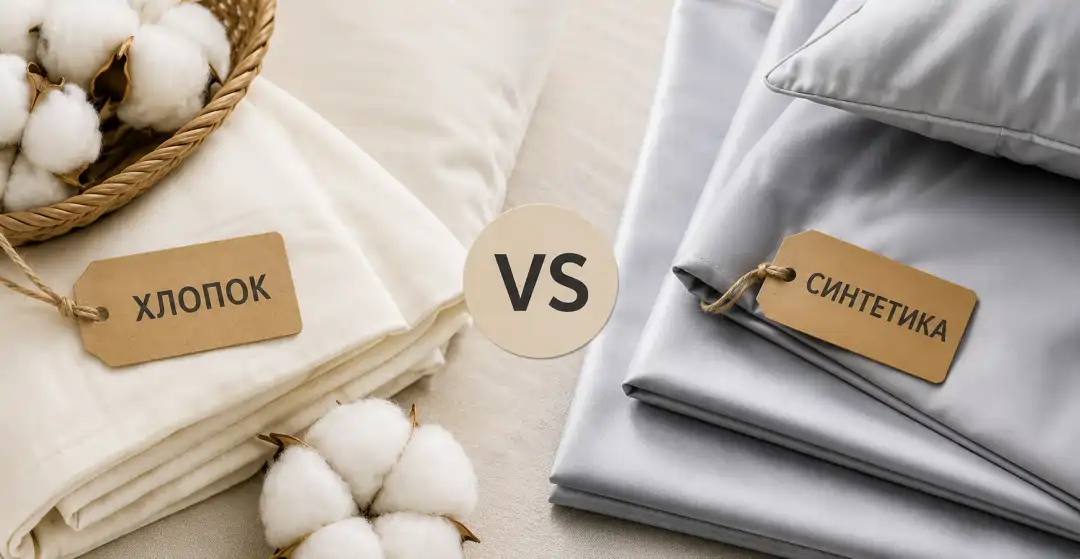
Cotton vs Synthetic Fibers: Benefits and Key Features
When choosing a fabric, it is important to look beyond its appearance and consider its fiber composition. The composition largely determines how comfortable, breathable and durable a material will be, as well as how it feels against the skin.
Two of the most common options are natural cotton and synthetic fibers. What is the difference between them, and why is cotton so widely used in home textiles?
What is cotton?
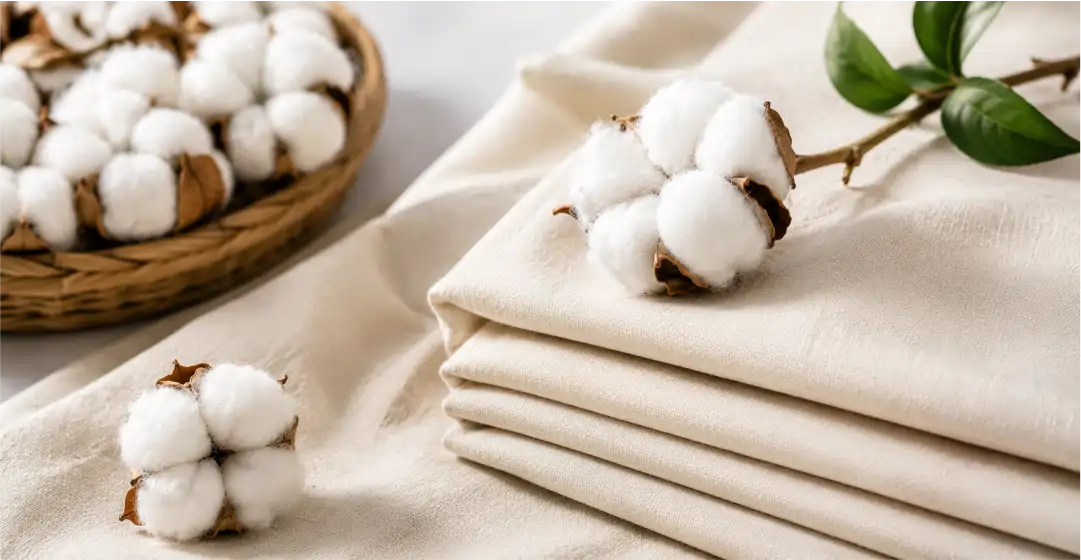
Cotton is a natural plant-based fiber obtained from the cotton plant.
Due to its natural structure, cotton allows air to pass through and absorbs moisture effectively. This makes it widely used for fabrics that come into direct contact with the skin.
Key properties of cotton:
- natural origin;
- good breathability;
- moisture absorption;
- comfortable feel against the skin;
- pleasant tactile properties;
- suitability for different finishing and dyeing processes.
What are synthetic fibers?
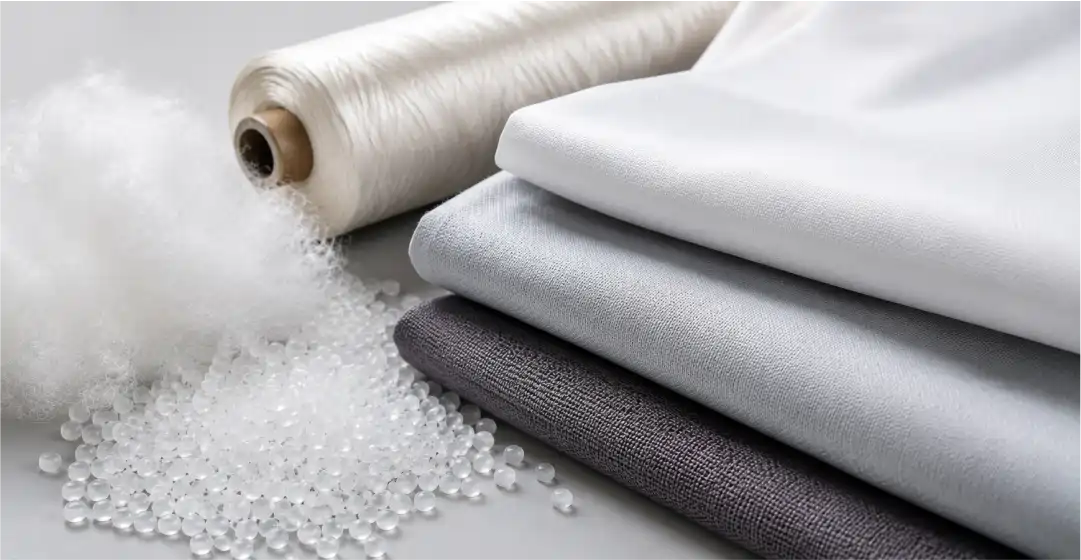
Synthetic fibers are manufactured industrially from polymer-based materials. Examples include polyester, polyamide and acrylic.
These materials can offer high durability, fast drying and good shape retention. However, the feel of synthetic fabrics and their breathability can differ from natural fibers.
For this reason, material selection should consider not only durability but also the intended use of the product.
What is the main difference?
One of the main differences is the origin of the fibers and how they behave when in contact with the skin.
Cotton is a natural fiber known for good breathability and moisture absorption.
Synthetic fibers are manufactured industrially and can have different performance characteristics depending on the specific polymer used.
Therefore, it is not enough to compare materials simply as "natural versus synthetic." The exact composition and intended application of the fabric also matter.
Why is cotton widely used in home textiles?
Home textiles often come into direct contact with the skin. This makes comfort, breathability and moisture absorption important characteristics.
Cotton is well suited to these products because of its natural properties. Cotton fabrics can also undergo different finishing processes that improve specific characteristics.
For example, cotton mercerization can help make the fabric surface smoother, give it a natural sheen and improve certain performance properties.
Composition is not the only factor
Even two fabrics with the same composition can differ significantly in quality and performance.
Fabric properties can be influenced by:
- quality of the raw material;
- fiber length and characteristics;
- spinning method;
- fabric density;
- weave structure;
- dyeing technology;
- additional finishing;
- sewing quality.
Therefore, the label "100% cotton" alone does not describe every characteristic of the finished fabric.
How should you choose the right material?
When choosing a fabric, consider where and how it will be used.
For products that come directly into contact with the skin, natural cotton materials are often preferred because of their comfort and breathability.
Synthetic fibers can be useful where specific performance characteristics are required, such as increased durability or faster drying.
The key is to choose a material based not only on price or appearance, but also on its composition, production technology and intended use.
How does Bahmal work with cotton?
At Bahmal, quality starts with the raw material.
We focus not only on fabric composition but also on every stage of production — from fiber and fabric processing to dyeing, mercerization, sewing and final packaging.
Modern finishing technologies help us bring out the best properties of cotton materials and create high-quality home textiles.
Conclusion
Cotton and synthetic fibers have different properties and applications.
Cotton is valued for its natural origin, breathability, moisture absorption and comfortable feel against the skin.
Synthetic materials have their own performance characteristics and can be suitable for products where specific technical properties are required.
When choosing a fabric, it is therefore important to consider not only the material name, but also its composition, raw material quality, production technology and intended use.
